Here's what nobody tells you about starting over after 40
You know what you want now. That's the good news. The complicated part is showing someone new what that looks like without apologizing for it or over explaining yourself into an awkward corner.
By 40, most people have spent enough time with their own bodies to understand pleasure. But introducing a clitoral vibrator like a lemon vibrator to a new partner can feel like you're announcing that something's wrong with you. It's not. What's actually happening is you're setting the tone for a relationship where pleasure matters and communication is normal.
Why the conversation feels harder than it should
Let's name the thing that makes this awkward. You're worried your new partner will take it personally. That somehow mentioning a vibrator means you're not satisfied with them, or that their touch isn't enough. This is the myth that kills good conversations.
Here's the reality: a vibrator is not a commentary on your partner's performance. It's a tool that works on a frequency your hand, lips, or penis simply can't replicate. The clitoris has 8,000 nerve endings concentrated in a tiny area. Air-suction technology, the kind used in lemon vibrators, mimics a sensation that's basically impossible to recreate manually. That's not about them. That's about physics.
The second thing making this hard: you've probably had partners in the past who reacted badly. Dismissive comments, jealousy, or worse, the silent treatment. That history lives in your body. At 40-plus, you've earned the right to not repeat those patterns, but the muscle memory of shame is still there.
The three-step approach that actually works
Step 1: Choose your moment, not your crisis.
Don't bring this up during sex or right before. Don't frame it as "we have a problem." Pick a moment that's calm, clothed, and away from the bedroom. A walk, a quiet morning coffee, or late evening on the couch. Somewhere you can both look at each other without performing.
Start with the easiest version of the truth. "I've been thinking about something that would feel really good for me in bed, and I wanted to talk about it with you." That's it. No apologies. No lengthy preamble.
Step 2: Make it collaborative, not transactional.
This is where most people fail. They present the vibrator like a standalone thing: "I want to use this sometimes." That sounds like the vibrator is a substitute for them. Better framing: "I think this could be fun for both of us."
And mean it. If you're introducing a lemon vibrator, talk about how it feels, what sensations it creates, how intensity builds. Ask them what they're curious about. Offer to let them hold it, experiment with it on their own fingers first, or watch you use it. Curiosity is less threatening than performance anxiety.
One thing I see work consistently with partners over 40 is vulnerability in the other direction. If your partner has ever felt inadequate about stamina, erection, or anything else, saying "I need this because sometimes my body works differently than yours, not because you're not enough" opens a door. You're not blaming. You're explaining.
Step 3: Integrate it slowly into actual intimacy.
Don't use it the first time you have sex after this conversation. That's too much pressure on both of you. Instead, maybe the next time you're together, you mention it casually: "Want to try that thing I mentioned?"
Start with foreplay. Use the lemon vibrator on yourself while your partner watches. Let them see what turns you on. This is not performance. This is honesty. After a few times, you might invite them to use it on you. Then, much later, maybe during penetration or as part of partnered play. But there's no rush.
The magic of this slow integration is that it removes the threat. Your partner stops seeing the vibrator as competition and starts seeing it as part of the landscape of your pleasure. They're not being replaced. They're being included.
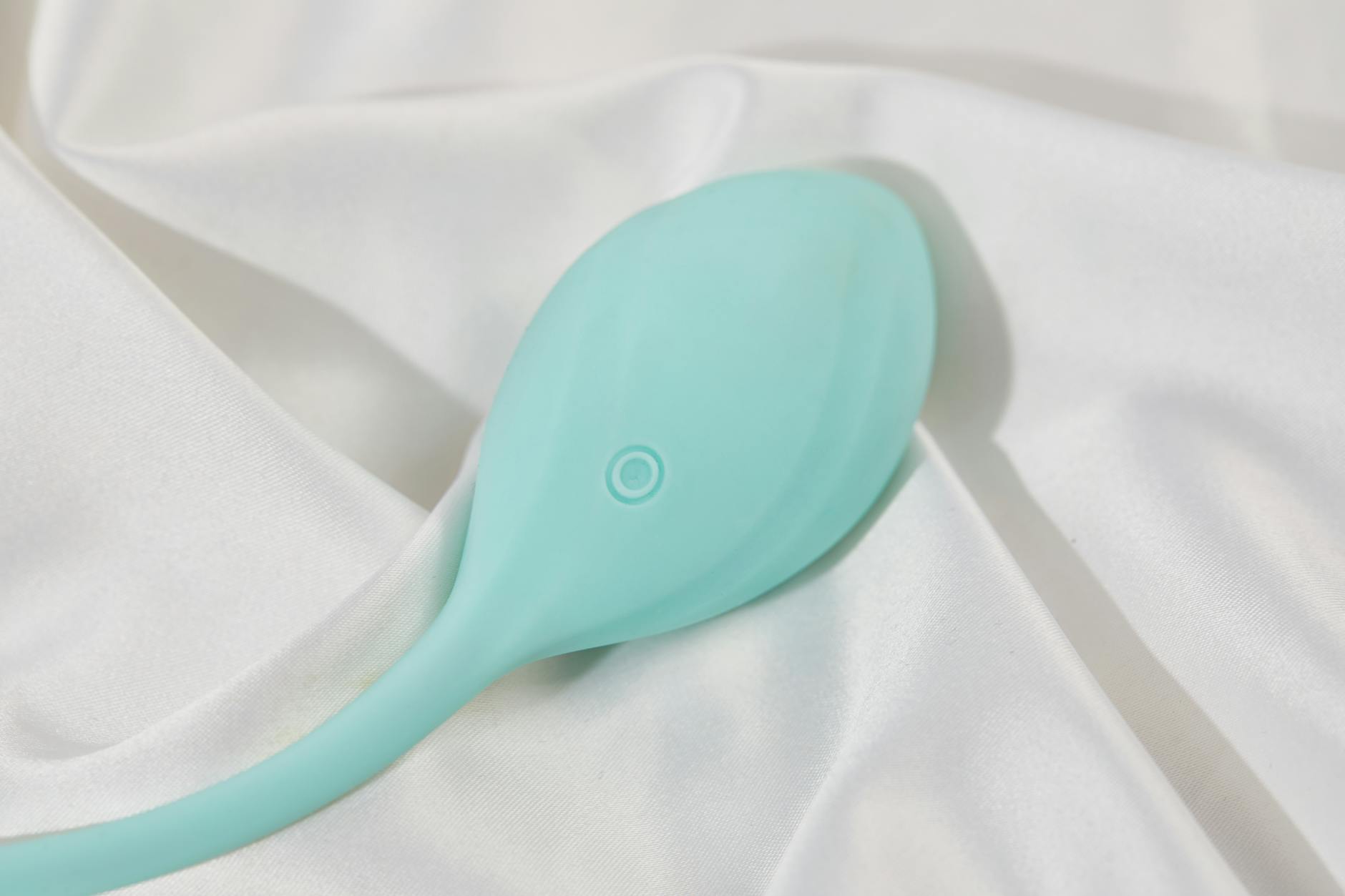
Photo by IFONNX Toys on Pexels
What to actually say (and what not to)
Let's be specific, because I know the words are the hardest part.
Good openings: "I've learned a lot about what feels good for me, and I want to share that with you." Or: "There's something I've discovered that I'd really like to try together." Or, if you're naturally direct: "I want to talk about introducing a vibrator. Here's why I think it could be amazing for us."
Things to avoid: "My ex and I used to..." (sets up comparison). "I'm not satisfied without this" (sounds like rejection). "Most women need this" (feels clinical and removes you from the equation). "Don't worry, you won't feel left out" (acknowledges the fear rather than dissolving it).
If your partner seems hesitant, resist the urge to convince. Instead, ask: "What are you worried about?" Listen. Actually listen. They might say something like "I thought you were happy with me." Now you get to say: "I am. This isn't about happy or unhappy. It's about exploring." That's a different conversation.
The specific advantage with a lemon vibrator
If you're specifically considering a lemon vibrator, there's actually something worth mentioning to your partner. Lemon vibrators and similar clitoral suction toys work differently than traditional vibrators. They use gentle suction and pulsing patterns that feel less like buzzing and more like a concentrated massage.
This matters to partners who've never tried one before because it doesn't feel threatening in the same way. It's not a loud bullet vibrator in the middle of the bed. It's more intimate, more subtle. You can use it in more positions. It integrates more easily into partnered sex.
When you're talking to your new partner, you might say: "I want to try something that feels different. It's less about intensity and more about a specific kind of sensation. Want to explore it together?" That's genuinely collaborative language, and it's true.
What if they say no
Here's the hard part. If your new partner after 40 says they're not comfortable with a vibrator, you get to decide what that means for the relationship. This isn't a small thing. This is them setting a boundary around your pleasure that's rooted in their own insecurity.
You can have another conversation. You can set a timeframe ("Let's revisit this in a few months"). You can negotiate (maybe they're okay with it, but not during partnered sex). But you cannot go back to apologizing for your body or what it needs.
One of the reasons people over 40 are often happier in relationships is that we stop accepting less than we want. If pleasure matters to you, and it should, a partner who respects that will ultimately make you happier than one who doesn't. There's no amount of compatibility in other areas that makes up for that particular gap.
Most partners, though, are curious or at least open. They want you to feel good. They want to be part of that. The conversation just needs to position it that way.
Building the bigger picture
Introducing a lemon vibrator or any adult toy to a new partner over 40 is really about modeling how intimate communication works. You're saying: "My pleasure matters. Your comfort matters. We can talk about both." That's not just about sex. That's the foundation of everything else.
If you want to deepen the conversation further, you might explore other aspects of pleasure that could benefit from communication, like how antidepressants affect arousal or how to reconnect after a long time apart. The skills are the same. Honesty, curiosity, and zero shame.
Your new relationship at 40 doesn't have to repeat the patterns of old ones. You get to rewrite this.
Common questions about introducing vibrators to new partners
Does introducing a vibrator early in a relationship seem too forward?
Not if you frame it right. Early on, establishing that communication about pleasure is normal is actually a gift. You're setting expectations. Partners who appreciate you will respect that you know what you want. Those who don't aren't your people anyway.
What if I'm embarrassed to admit I use a vibrator solo?
Take that to the conversation slowly. You don't have to disclose your full solo practice immediately. You can say "I've learned what feels good and want to share that." Let them assume you know because you're in your 40s and have done the work. You don't owe a detailed timeline.
Can I use a lemon vibrator if my partner has erectile dysfunction?
Yes. In fact, a clitoral vibrator can actually take pressure off someone managing ED because it shifts focus from penetration to mutual pleasure. Talk about it as a tool that benefits both of you, because it does. If your partner is dealing with ED, introducing something that guarantees your pleasure might actually ease their anxiety. Knowing they can satisfy you with a vibrator is often less stressful than pressure to perform without one.
Will my new partner think I'm comparing them to an ex?
Only if you mention an ex. Don't. Keep it about you and your body, not about what you did before. "I know what I like now, and I want to experience it with you." That's backward-looking in a healthy way.
How do I know if a partner is genuinely okay with it or just saying yes to keep me?
Watch for curiosity. A genuinely okay partner will ask questions, want to learn, maybe even suggest something. A partner just complying will be polite but quiet. That's information. You might say, "I want to make sure you're actually into this, not just tolerating it." Again, that's collaborative communication.
Is it weird to use a vibrator during partnered sex if we're not fully comfortable with it yet?
Yes. Start separate from partnered sex. Use it solo while they're not there. Then introduce it to foreplay. Then, much later, during sex if it feels natural. Rushing that timeline adds pressure nobody needs.
The bottom line
You're not asking permission. You're inviting collaboration. There's a difference. A partner who loves you at 40 will want you to feel good. A partner who sees your pleasure as threatening isn't the right fit, no matter what else they bring to the table. The conversation about a lemon vibrator is actually a conversation about whether you can be honest with this person. If you can, everything else gets easier.
If you're still working through anxiety about pleasure in general, understanding how to reconnect might be another useful read. But for this moment, just know: you've earned the right to feel good. A new partner worth keeping will celebrate that.
Ready to start fresh? Get in touch at /contact if you want to work through relationship dynamics around pleasure more deeply.