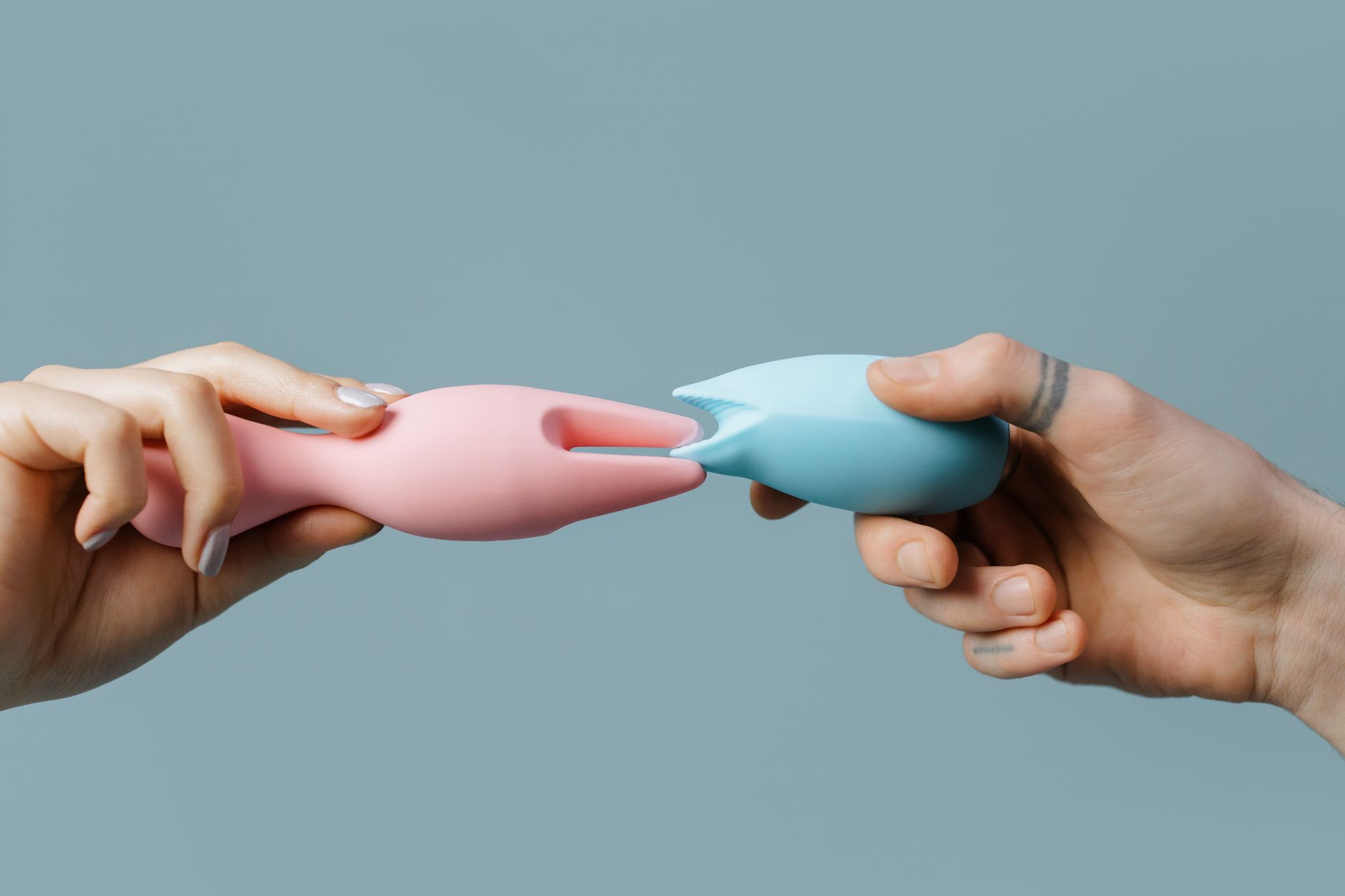
Let's talk about the awkward first month
You've just unboxed your lemon clitoral vibrator. It feels good in your hand. You read the instructions. You turn it on. And then... it feels like something is happening, but not quite the way you imagined. Maybe it's too gentle. Maybe the sensation is unfamiliar. Maybe nothing happens at all.
This is not a sign the toy is broken or that you're doing it wrong. This is what happens when your nervous system meets a new sensation for the first time.
The neuroscience behind the adjustment period
Your body has been conditioned by whatever forms of stimulation you've used before. If you've mostly relied on manual touch, vibration is genuinely novel to your nerve endings. If you've used traditional vibrators, the suction sensation of a lemon vibrator works through an entirely different mechanism.
When you introduce a new stimulus, your brain doesn't immediately categorize it as "pleasure." It first categorizes it as "novelty." That's a protective response. Your nervous system is running a background check: Is this safe? Is this good? Should I respond to this?
This process typically takes two to four weeks. Some people shift faster. Some need six weeks. Neither is wrong.
During those first sessions, your body is doing quiet work. Your nervous system is mapping the sensation. Your pelvic floor is learning how to engage or release around this new input. Your brain is writing new neural pathways. None of this feels dramatic. It feels like... not much.
Why pressure and sensation patterns matter
A lemon clitoral vibrator uses air-suction technology rather than pure vibration. The sensation is gentler than many traditional vibrators, which is fantastic for sensitive tissue, but it also means your body might not recognize it as "the thing that used to work" if you're coming from a different toy.
The pattern also plays a role. Most lemon vibrators come with multiple settings. On setting one, the pulse is subtle. Many people instinctively jump to settings three or four, assuming that stronger means better. Your clitoris is actually more responsive to patterns and rhythm than to sheer intensity. Starting low and letting your body acclimate to the pattern first, then exploring higher settings, is how most people find their rhythm.
I've worked with hundreds of clients through this transition. The ones who see the fastest improvement are the ones who treat the first month as an experiment, not an audition.
What the adjustment actually looks like, week by week
Week one to two: The sensation might feel muted, strange, or just "not doing much." This is your body in the novelty phase. Keep using it three to four times per week for five to ten minutes, even if it feels underwhelming. You're training your nervous system.
Week three: You might notice the sensation becoming more distinct. Colors might seem brighter when you close your eyes. You might feel a warming or tingling that wasn't there before. This is your brain starting to integrate the signal.
Week four and beyond: Many people report that the feeling suddenly "clicks." The sensation becomes clearly pleasurable. Your body knows what to expect and starts building arousal in response. This is when most people realize the toy works.
But here's the thing. Even after the click happens, your pleasure response might be quieter than you're used to. That's not a problem. The Lem and similar lemon vibrators are designed to work through building sensitivity over time rather than creating immediate, overwhelming sensation. Sensitivity builds. Pressure builds. Orgasms come from that accumulation, not from shock and awe.
The role of mental permission and distraction
I need to separate the physical adjustment from what I see clinically all the time: psychological interference. Sometimes the toy feels "wrong" because your body is genuinely still acclimating. Sometimes it feels wrong because part of you is skeptical about whether this is going to work, or whether you deserve this, or whether you're doing it "right."
That mental noise is real and it directly impacts sensation. When you're monitoring whether something is working instead of letting it work, your nervous system stays in low-level alert. You can't feel pleasure clearly through that filter.
The fix is boring but it works. Set a specific time. Go somewhere private. Use the toy with zero agenda except to notice what's happening in your body. Not to make something happen. Just to notice. No rushing to the finish line. If nothing happens, that's data, not failure.
Most of my clients find that the psychological piece settles within one to two weeks once they realize the toy isn't broken and they're not broken. Permission is half the battle.
When lube and technique matter most
If you're three weeks in and still feeling nothing, check two things. First: lube. The suction mechanism on a lemon clitoral vibrator works better when there's gentle moisture. Not drenched. Just enough that the toy can create a proper seal. Water-based lube is your friend here. This alone changes the sensation for maybe forty percent of people who think the toy isn't working.
Second: positioning. The lemon sucker works best when the toy is positioned so the opening of the suction chamber creates a seal. If you're holding it at an angle where air is leaking out, you'll get vibration but not the full suction pulse. Spend a session just experimenting with angle and pressure. Small adjustments create massive differences in sensation.
The rare case where it's actually not clicking
If you're six weeks in, you've used it regularly, you've tried different settings, you've added lube, you've adjusted positioning, and it still feels like nothing, your body might genuinely need a different stimulus. Some people respond better to stronger vibration. Some people need a different shape. Some people need combination input (clitoral plus internal, for example).
This isn't failure. It's data. Our bodies aren't all wired the same way. The fact that a lemon clitoral vibrator works brilliantly for millions of people doesn't mean it's the right tool for you. And that's okay. If this resonates, exploring other options or talking to a sex therapist who specializes in pleasure responsiveness is the next logical step.
How to accelerate the adjustment without forcing it
Honestly, the best way to accelerate is to stop trying to accelerate. But here are the practical moves that actually help.
Use it regularly but not obsessively. Three to four times per week, five to ten minutes per session, is the sweet spot for nervous system integration. Daily use can sometimes create a different kind of resistance. Weekly use is too infrequent for most people's brains to register the pattern and build the pathway.
Combine it with activities that put you already in a slightly aroused state. If you use a lemon vibrator when you're already warm from reading something that turns you on or from partner foreplay, your nervous system has less distance to travel. The signal is clearer.
Pay attention to your pelvic floor. Many people unconsciously clench during the adjustment period, which actually blocks sensation. Learning to actively relax your pelvic floor while using the toy helps the sensation register more clearly. This is one place where a single pelvic floor physical therapy session can be genuinely transformative.
Give yourself permission to adjust the expectations. You don't have to orgasm the first time you use a lemon vibrator. The adjustment period is about sensation clarity and nervous system mapping, not about orgasm achievement. Once those are in place, pleasure and orgasm follow naturally.
People also ask
How long until a lemon vibrator should feel amazing?
For most people, noticeable improvement happens between two and four weeks of regular use. "Amazing" typically lands around week four to six. If you're still not feeling much by week six and you've tested positioning, lube, and different settings, it's worth exploring whether a different toy might be a better match for your body's responsiveness.
Why does my lemon clitoral vibrator feel less intense than other vibrators?
Lemon vibrators use suction rather than pure vibration, which creates a different, typically gentler sensation. This is a feature, not a bug. It means the toy works beautifully for sensitive tissue and builds sensation through pattern rather than force. If you're coming from a very powerful traditional vibrator, the suction might genuinely feel quieter at first. Your nervous system is learning a new language.
Can I use my lemon vibrator every day?
You can, but most people find that three to four times weekly during the adjustment period, then whatever frequency feels good after, works better. Daily use can sometimes create numbness rather than sensitivity. Think of it like training a muscle. Consistent input with recovery time is more effective than constant stimulation.
Does the adjustment period mean my lemon vibrator doesn't work?
No. The adjustment period is completely normal and expected. Your nervous system needs time to integrate a new sensation. This happens with almost any new toy, especially ones that use different technology than what you're used to. If you're two weeks in and it still feels like nothing, keep going. Most people report that the sensation clicks suddenly somewhere in weeks three to four.
What if I never feel comfortable with the suction sensation?
Some bodies prefer pure vibration over suction. That's totally fine. The fact that something works beautifully for most people doesn't mean it's right for everyone. If suction genuinely doesn't resonate with you after a genuine adjustment period, exploring other lemon sexual toys or different technology might be the answer. Your pleasure matters more than loyalty to any single toy.
Does my partner need to know about the adjustment period?
That depends on your dynamic. If you're using the toy solo, this is entirely your private process. If you're incorporating it with a partner, some people find it helpful to mention that there's typically a two to four week adjustment window. That way, if the first few sessions feel awkward, your partner doesn't assume it means the toy isn't working or that you're not interested. Shared expectation makes the process easier.
The long game
Lemon vibrators, especially the Lem and other clitoral suction toys, are built for people who want sustainable, responsive pleasure. They're not designed to blow your mind in minute one. They're designed to become part of your body's landscape. That takes time.
But once it clicks, here's what I hear from clients. The sensation becomes more nuanced, not less. You notice subtleties in how your body responds to different patterns. Your orgasms often become easier and sometimes deeper. Your connection to your own pleasure grows.
That's what the adjustment period is buying you. Not instant gratification. Genuine, durable responsiveness.
If you're in week two and it still feels like nothing, you're not doing anything wrong. Your nervous system is working exactly as it should. Keep going. The landscape will shift.