
How to Use a Lemon Vibrator as a Couple to Improve Shared Pleasure
Let's be real. Most couples approach vibrators wrong. They wait until someone feels hurt or unsatisfied, then they introduce one defensively. That energy is everything. If you bring a lemon vibrator into your intimate life together with the right framing, it stops being a substitute for anything and becomes what it actually is. A tool that lets you both feel better, together.
I've watched countless couples transform their connection once they get past the idea that toys threaten anything. A lemon clitoral vibrator is not a replacement for a partner. It's an invitation to explore what pleasure actually looks like when both of you are focused on the same goal. Not performance. Not obligation. Actual sensation and satisfaction.
Here's how to make that transition with minimal friction.
The conversation that changes everything
If you're thinking about bringing a lemon vibrator into your couple's experience, the introduction matters more than the toy itself. I recommend framing it around curiosity, not lack. Wrong: "I want this because you're not doing enough." Right: "I want to explore this together. I'm curious what it feels like, and I want you there."
The best couples I work with have what I call the "pleasure conversation." Not about what's wrong. About what's possible. Sit down, no phones, when you're not already intimate. Say something like: "I've been thinking about trying a vibrator together. Not because anything's missing, but because I'm curious about sensation and I want to experience that with you."
Then listen. Really listen. Your partner might feel nervous. They might worry it means they're not enough, or that you're bored. Those feelings are real, even if they're not logically grounded. Reassure them without dismissing. Explain what you actually want: connection, exploration, shared pleasure. The lemon vibrator is just the vehicle.
If your partner is hesitant, ask why. Is it about their own insecurity? Fear of not knowing how to use it? Concern about loss of control? Different blockers need different conversations. And sometimes, you need to wait. Forced exploration isn't exploration. It's pressure.
Why lemon vibrators work specifically for couples
Not all vibrators are created equal for partner play. Wand vibrators are loud. Rabbit vibrators can feel clinical. But lemon sexual toys, especially air-suction devices, have a particular advantage. They're intuitive. Your partner doesn't need detailed instructions. The sensation is concentrated and controllable. And the design itself feels less intimidating than some alternatives.
The clitoral vibrator design also means your partner can use it on you while staying close. No reaching behind you, no awkward angles. They're right there, they can see your face, they can feel your body. That closeness is half the point. Pleasure doesn't happen in isolation. Connection makes sensation land differently.
I also recommend starting with a lemon clitoral vibrator rather than a wand or egg vibrator. The lemon sucker design is more precise. It's harder to "get wrong." And the intensity levels are graduated, which means you can build together rather than jumping to maximum sensation immediately.
The actual integration: timing and technique
Don't introduce a vibrator for the first time during peak arousal. That's when you're least able to have a smooth, integrated experience. Instead, bring it into foreplay. Earlier. When you're both still partly clothed, when there's room to laugh, when the pressure is still low.
One of you holds the vibrator. Start at a low setting. Usually pattern 1 or 2. Your partner applies it gently, exploratively. The receiving partner should give feedback immediately. Not "does this feel good?" but specific direction. "A little to the left." "More pressure." "Slower." That feedback loop is crucial. It teaches both of you something about how sensation actually works for this body, in this moment.
Many couples report that once they get past the first three minutes of awkwardness, something shifts. The vibrator stops feeling novel and starts feeling normal. It becomes part of the dynamic rather than a guest in the room.
If your partner is the one using the lemon vibrator on you, you get the added benefit of their touch on the rest of your body. They can be inside you or against you elsewhere while using the toy. Or you can be on top, controlling depth and pace while they handle the vibrator. The combinations are endless. The key is ongoing communication. "I like when you do this." "That angle works better." "Can you come closer?"
Managing the logistics that nobody talks about
Here are the things guides never mention but couples always need to know.
Battery life. Some lemon vibrators last twenty minutes on a charge. Some last longer. Know before you start, so you're not frustrated mid-session. Charge it beforehand. A dead vibrator mid-play is a mood killer.
Lube compatibility. If you're using lube, you need water-based. Silicone lube damages silicone toys. But here's what I tell couples: lube matters anyway. Your partner using a vibrator on you works better with additional lubrication. The sensation is smoother. The toy glides instead of tugging. Add that layer.
Cleanliness. Wash the vibrator before and after use with warm water and mild soap. Your partner needs to see you do this. It's not sexy, but it's responsible. And it means both of you trust what's happening.
Volume. Some lemon vibrators are loud. Some are quiet. If noise is a factor (shared walls, kids in the house, just general discomfort with sound), test it first. Some couples care; some don't. Know where you both land before you're in the moment.
When things feel off: troubleshooting together
Maybe the sensation doesn't feel as good as you expected. Maybe your partner feels left out or awkward. Maybe you're not sure where the vibrator fits into your rhythm. These are all totally normal. They don't mean the experiment failed.
If the sensation disappoints, try a different intensity level. Try a different pattern. Spend more time on foreplay first. Let arousal build completely before introducing the vibrator. Sometimes what feels meh at 30% arousal feels incredible at 80%.
If your partner feels insecure, take a break and have a conversation. Not during intimacy. Later, when you're both calm. Ask directly: "What felt off for you?" Listen without defending. "I introduced this wrong." "I didn't make it clear this is about us, not about replacing you." "Let's slow down." These conversations build trust.
If the logistics feel clunky, adjust. Maybe you don't use the vibrator every time. Maybe you use it sometimes as a warm-up, and sometimes as the main event. Maybe your partner uses it on you, and you never use it on them, and that's perfectly fine. Pleasure doesn't have to be symmetrical to be shared.
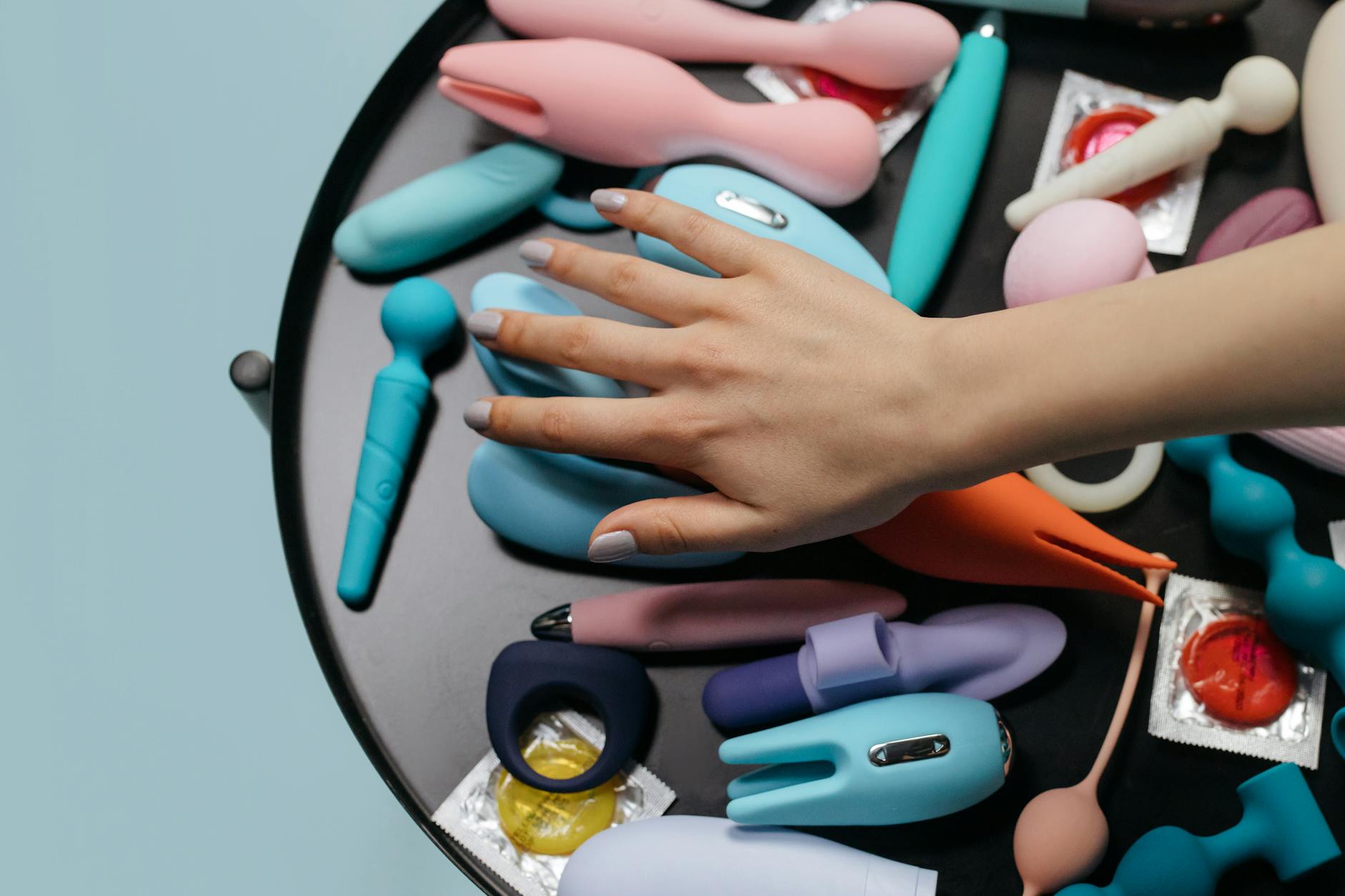
Photo by cottonbro studio on Pexels
Building a pleasure language with your partner
One of the unexpected gifts of introducing a vibrator as a couple is that you end up talking more explicitly about pleasure. You have to. You learn words. You practice vulnerability. You normalize asking for what you want.
After a few times using a lemon vibrator together, many couples find that sex becomes less scripted. You know how to ask for sensation adjustment. You know how to say no without apologizing. You're less afraid of feedback because you've practiced it in a lower-stakes context.
Some couples create a signal system. "Pattern two" means "perfect, keep doing this." "Slower" means "I want to stay in this feeling longer." Others just use basic direction. The language isn't what matters. The consistency does. Once you know how your partner communicates desire, everything becomes easier.
Over time, the vibrator becomes invisible. You stop noticing it as a separate thing. You notice the pleasure instead. And that's exactly when you know it's working.
FAQ: Questions couples actually ask
What if one partner is much more interested than the other?
Wait. Seriously. Mismatched desire for toy use doesn't mean anything about your connection. It means one of you is curious and the other isn't, and that's fine. The resistant partner might come around. They might not. Either way, pushing creates resentment. Suggest it once. Listen to the answer. If it's no, accept that. If it's "maybe later," set a time and revisit. Never spring a vibrator on someone who's said no.
Can we use a lemon vibrator during penetrative sex?
Absolutely. One partner is inside; the other (or you yourself if you're alone) uses the lemon clitoral vibrator externally. This combination intensifies everything. Start slow. Build communication around what pressure and angle feel good. Some couples do this every time. Others reserve it for special occasions. Neither is wrong.
Does using a vibrator mean our sex life is failing?
No. Actually the opposite usually. Couples who introduce toys tend to be more communicative overall. You're more likely to talk about pleasure, boundaries, and desires. You're less likely to settle into boredom or resentment. If anything, it's a sign of a partnership that's willing to evolve.
How often should we use a lemon vibrator together?
As often as you both want to. Some couples use one every time they're intimate. Some use it once a month. Some use it sporadically. There's no frequency that's "correct." What matters is that you both feel enthusiastic. The moment it becomes routine obligation, something's shifted. Check in with each other.
What if my partner wants to use the vibrator on themselves and exclude me?
First, that's valid. Solo use is completely different from partnered use, and both are fine. But if it feels like exclusion to you, say that. "I feel left out when you use it solo." Then listen to why they want solo time. Maybe they need to explore without pressure. Maybe they're figuring out what feels good before inviting you into it. Neither means anything about your connection. It's just different information.
We're long-distance. Can we use a lemon vibrator together?
Some couples use video during solo toy use with a partner on the other end. But long-distance toy use is different. The physical intimacy that makes a lemon clitoral vibrator special for couples is absent. You might explore separately and share afterwards. Or you might decide partnered vibrator use is something you save for when you're in the same room. Both approaches work.
The real payoff
I work with couples who've been together twenty years, and I work with couples in their first six months. The ones who introduce vibrators together almost always report the same thing afterwards. Not that sex got better. That they feel closer. That they know each other's bodies and desires more clearly. That vulnerability got easier.
You've probably heard this before: the best sex happens when you're genuinely communicating. When you're paying attention. When you're willing to ask for what you want and listen to what your partner wants. A lemon vibrator doesn't create that. It just gives you practice. It gives you a way to talk about pleasure without shame. It gives you permission to explore together instead of separately.
That's worth far more than any toy on its own. The vibrator is just the excuse.
Ready to explore together?
If you and your partner are thinking about adding a vibrator to your intimate life, start with the conversation. Skip the how-to guides and start with honesty. What are you both curious about? What feels scary? What do you want to feel? Once you're aligned on those questions, the mechanics become simple.
Need more guidance on how to navigate this with your partner, or want to explore communication around pleasure more deeply? Reach out at /contact. Real conversation helps.
You deserve pleasure. Both of you. Together.