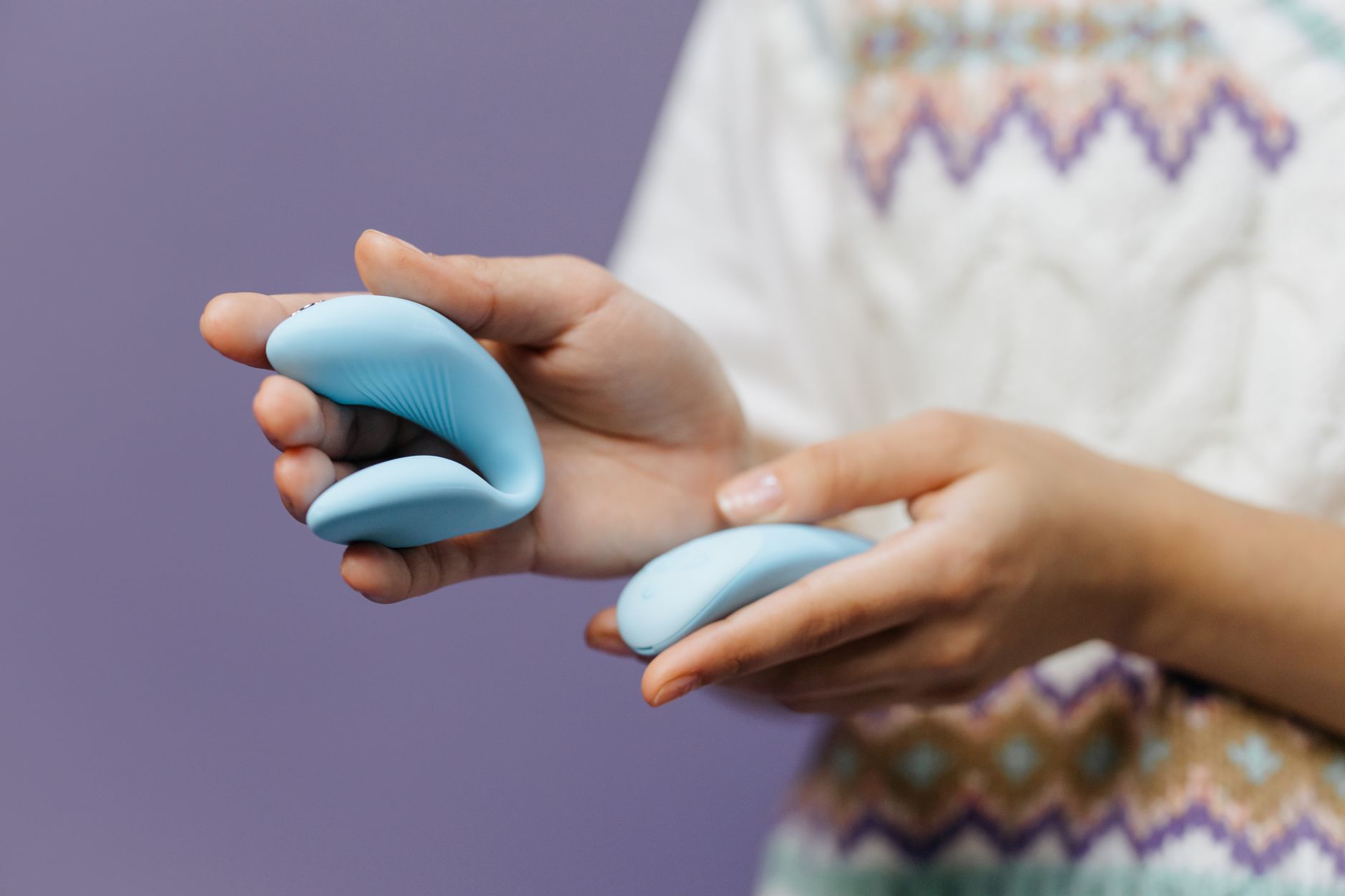
Let's name the actual problem
Here's what you're navigating: your partner equates penetration with "real" sex. External stimulation feels like a detour, or worse, a rejection of their capacity to satisfy you. Meanwhile, you know damn well that you need clitoral contact to orgasm reliably, and neither of you wants to spend 40 minutes fighting about it before anything happens.
This is one of the most common friction points I see in my practice, and it's solvable. But not by pretending the tension doesn't exist or by secretly using a lemon clitoral vibrator when they're not looking.
Why this resistance shows up (and it's not what you think)
Most partners who resist external toys during sex aren't actually worried about the toy itself. They're navigating a collision of three things: (1) a story about what "counts" as sex, (2) anxiety about whether they're "enough," and (3) sometimes, genuine unfamiliarity with how clitoral stimulation works alongside penetration.
The anxiety piece is real. Many people were taught that a partner's orgasm during penetration is the gold standard. When that doesn't happen, they interpret it as failure rather than variation in anatomy and response. Adding a lemon vibrator into the mix can feel like evidence that they've failed.
That's not rational, but it's human. And you can't logic someone out of shame.
The reframe that actually works
Stop asking permission to use your lemon clitoral vibrator. Start inviting them to use it with you.
This is a shift from "Can I use my toy while you're inside me?" to "I want to show you how this feels, and I want you to be part of it." One asks forgiveness. The other builds connection.
Here's what I tell couples: a lemon vibrator isn't a replacement for penetration. It's an ingredient. It's the thing that lets both of you experience more sensation, not less. When you're using a clitoral lemon sucker while they're inside you, they're not competing with the toy. They're adding depth to an experience that already includes clitoral pleasure.
Three specific ways to introduce it
Start solo, then build to partnered.
Use your lemon vibrator alone, with them in the room, a few times. Not as a performance, but just as part of your routine. Let them see that it's normal, that you're not ashamed, that it's part of how you take care of yourself. Shame dies slowly in the presence of casualness. Once the tool feels ordinary to you, it's easier for them to see it that way too.
Name the pleasure increase explicitly.
When you're together, use external stimulation first, before penetration. Let them feel how responsive you are when you're stimulated that way. "Feel how wet I'm getting? I want you inside me now, and I'm going to keep the vibrator on while you do." You're not replacing what they do. You're amplifying the overall experience.
Make them the operator.
Hand them the lemon vibrator. "You hold it. I want to feel your hand there." This inverts the power dynamic instantly. They're not being replaced by the toy. They're using the toy as an extension of touch. Many partners who resist suddenly feel much more comfortable when they're holding it.
The logistics that matter
Three things that make this actually work:
Positioning. Penetration from behind, with the clitoral stimulation happening from the front, is often easier than face-to-face. Less visual competition, easier access, less awkwardness about angles. If face-to-face works for you, lean forward so they can see your face while the vibrator does its work. Intimacy matters here.
Communication during. "I'm getting close." "That feels incredible." "Keep doing that." Don't go silent. Your partner's anxiety thrives in silence. Words confirm that they're still part of the experience, not watching from the sidelines.
Timing. Don't wait until you're frustrated and resentful to introduce this. Introduce it when desire is high and stakes feel low. You're not solving a problem. You're expanding what's possible.
When resistance gets stuck
If you've tried the reframe and they're still refusing, you're looking at a deeper anxiety that a conversation alone might not fix.
Here's what that conversation might sound like: "I notice you're uncomfortable when I use the vibrator. I'm not trying to hurt you, and I'm not saying you're not enough. I'm saying that my body needs this to feel its best, and I want us to figure this out together instead of one of us sacrificing." Notice what you're doing here. You're not attacking. You're naming the reality and inviting partnership.
If they still won't budge, that's worth exploring with a sex-positive couples therapist. This isn't about the toy. It's about whether both partners' needs matter in the relationship.
Sometimes the answer is that they need education. They need to understand that clitoral stimulation is not a "nice to have" but a central part of sexual response for most people. Sometimes the answer is that they need to examine their own insecurity. Sometimes it's both.
The reality check
A lemon vibrator is not a threat to your relationship. Resentment is. Unmet needs are. The toy, honestly, might be the solution.
Your pleasure matters. Not as a luxury add-on, but as a fundamental part of sex working for both of you. Once your partner understands that pleasure expands when you're both focused on sensation rather than performance, the resistance often melts.
You're not asking for too much. You're asking for honesty and presence. The lemon clitoral vibrator is just the tool that makes that honesty visible.
People also ask
Can I use a lemon vibrator during penetration without it feeling uncomfortable?
Yes, and it's worth finding the right angle. Most people find that a lemon clitoral vibrator nestled against the clitoris while a partner is inside you feels like an amplification, not a disruption. The first time, start gently. You'll both adjust to the sensation quickly. The vibration might feel intense at first, but many people report that it actually relaxes the pelvic floor rather than tensing it, which can make penetration feel better.
What if my partner says the vibration bothers them during penetration?
That's a common first response, and it often shifts with repetition. The sensation is unfamiliar. You might try starting with lower settings on the lemon vibrator, or using it during different phases of penetration. Some people also find that using it only during final thrusts, rather than throughout, feels less disruptive. But also: you're allowed to have needs that require adjustment on their end, just as they're allowed to have needs that require adjustment on yours.
How do I bring this up without making my partner feel insulted?
Frame it as expansion, not correction. "I want to explore something that might feel amazing for both of us" is different from "I need this because you're not enough." Crucially, follow through. Don't just bring it up in a heavy conversation. Show them. Use your lemon clitoral vibrator confidently when you're together. Normalize it. People fear what they don't understand, and they stop fearing once it's familiar.
Is a lemon vibrator better for this than other types of toys?
The suction-based lemon vibrator has specific advantages for partnered sex. It doesn't require as much direct friction as traditional vibrators, so there's less fatigue and less sensation that feels "too much" when penetration is also happening. The sensation is also quite distinct from penetration alone, which makes it harder for a partner to feel it as a threat and easier for them to feel it as part of the shared experience. That said, what matters most is finding what works for your body and your dynamic.
What if my partner wants to use the vibrator on me instead of me controlling it?
That's often a great solution. It shifts the power dynamic and makes them feel included rather than excluded. You might guide them. "A little higher," "softer," "keep going." But letting them do it can actually dissolve the "toy replacing me" anxiety faster than anything else. They're not being replaced. They're participating.
How do I know if the resistance is about the toy or about something deeper?
Ask yourself: Is the resistance specifically about the vibrator, or is it about pleasure, control, or vulnerability in general? If your partner resists many things that require communication or change, you might be looking at a bigger pattern. A lemon vibrator is a tool, not a therapist. But sometimes, the conversation it opens up is the therapy.
The bottom line
Your pleasure is not optional. Your partner's comfort learning to support it is also not optional. The lemon clitoral vibrator is simply the point where those two needs meet. Start with conversation, move to demonstration, and keep going until both of you understand that this isn't a compromise. It's an expansion.
If you're still navigating this dynamic, speaking with a couples therapist can help clarify what's really going on beneath the surface. Your needs matter, and so does your connection. Sometimes the path forward requires a little outside perspective.