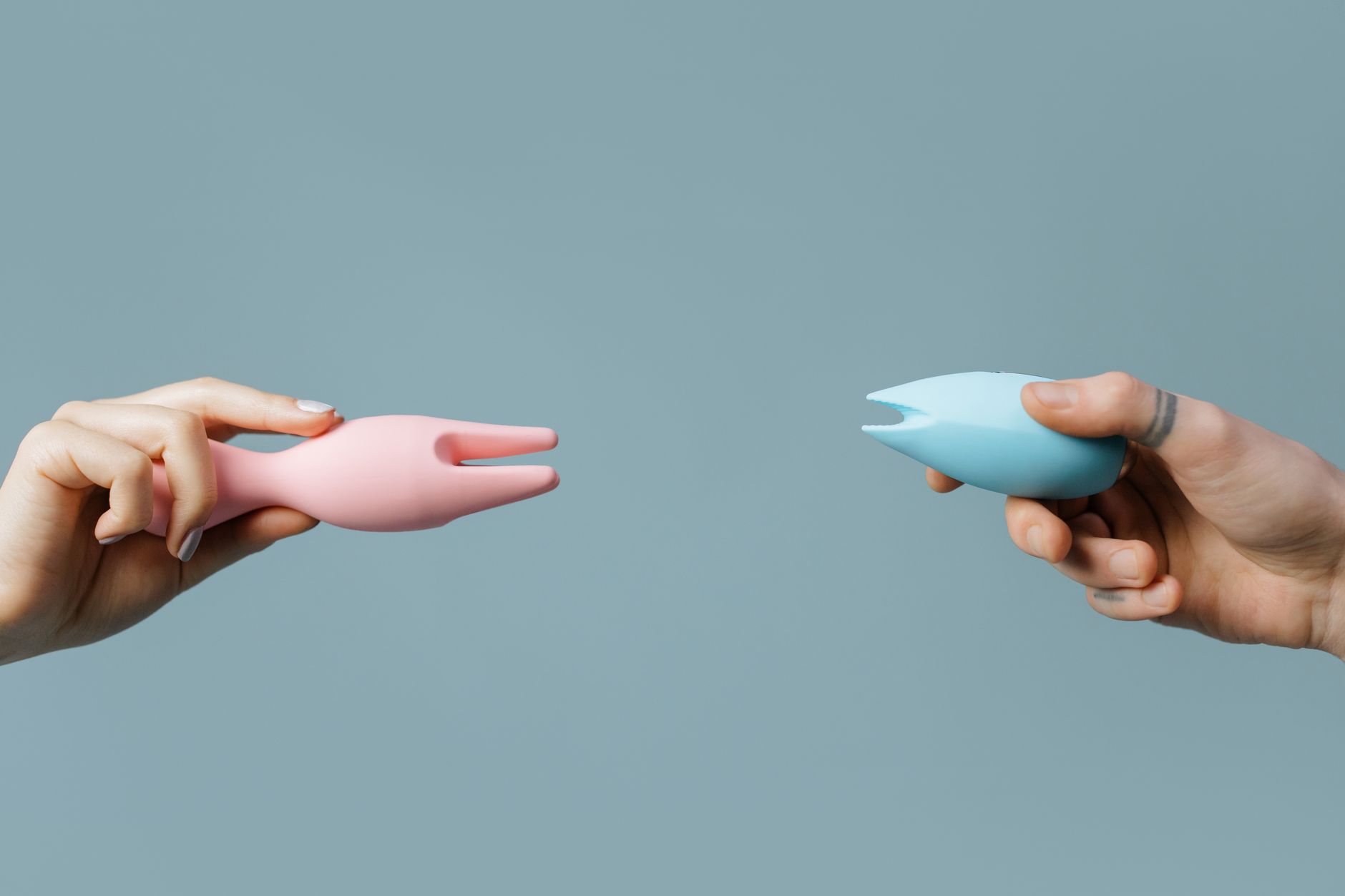
Let's talk about sensitive skin and pleasure
Sensitive skin isn't a barrier to pleasure with a lemon vibrator. It's just a different set of instructions. The problem is that most guides treat intensity like a one-size-fits-all dial when sensitive skin requires a completely different starting point.
Here's what I see in my practice: people with sensitive skin often assume they can't use a lemon clitoral vibrator at all, or they dive straight into medium intensity and spend the next two days dealing with irritation. Neither is true. The right approach changes everything.
What makes skin sensitive to suction
Sensitive skin reacts to several things when you introduce a lemon vibrator. First, there's the suction pressure itself. The lem vibrator uses air-pulse technology, which means it's creating a gentle vacuum around the clitoris. On thin or reactive tissue, that sensation can feel overwhelming faster than it would on thicker skin.
Second, there's friction from the silicone cup. If your skin is prone to irritation from fabrics, lube, or even partner contact, that friction will flag it immediately. Third, some people react to changes in local blood flow. Suction pulls blood into the area rapidly, which feels great for some and creates a burning or raw sensation for others.
Finally, there's the compounding effect of repeated stimulation. Even gentle intensity, used daily, can aggravate sensitive skin if you're not buffering with rest days or using the right prep.
Start lower than you think you should
The lem vibrator has settings 1 through 3. Most guides say beginners should start at 1. If you have sensitive skin, start at 1 and stay there for at least three sessions before considering a shift.
Why? Because intensity compounds. Your first experience at setting 1 builds a baseline. By your third or fourth use, your body adapts and what felt intense now feels gentle. That's when you can safely experiment with pattern variations or move to setting 2.
If you jump to setting 2 immediately, you're giving sensitive skin zero time to acclimate. You'll likely end up red, swollen, or too tender to use the device for days.
The role of lubrication
This is non-negotiable for sensitive skin. Water-based lubricant isn't optional. It's foundational.
Lubricant does two things: it reduces friction between the silicone cup and your skin, and it creates a barrier that protects delicate tissue from direct pressure spikes. Without it, you're introducing unnecessary abrasion.
Apply lube generously. A small amount is not enough for sensitive skin. You want the silicone cup to glide slightly over your skin rather than grip it directly. This small change cuts irritation risk dramatically.
Choose a thick, water-based formula. Thin lubes dry out quickly and forces you to reapply mid-session. That reapplication creates friction and starts the irritation cycle. A thick lube stays put for 15-20 minutes, which is usually enough for one satisfying session.
Pacing and rest days matter
If you're using your lemon clitoral vibrator every day, sensitive skin will eventually rebel. You need recovery time.
I recommend a 48-hour buffer between sessions if you have reactive skin. That means using the lem vibrator every other day, or even twice a week if you're just starting out. This isn't about willpower. It's about giving tissue time to return to baseline.
Within 48 hours, any minor irritation will resolve, blood flow will normalize, and your skin will be ready for the next session. If you use the device on days 1, 2, and 3 without a break, you're essentially keeping that tissue inflamed. That's when you see real discomfort.
Patterns versus intensity
Here's something that shifts things for sensitive skin: you don't have to use suction-only mode. Many lemon vibrators offer pattern options. Some alternate suction and release. Others pulse. Some do rhythmic waves.
If intensity is the issue, try a pattern that feels less like constant pressure and more like a rhythm. A pattern can feel gentler than a constant setting 2, even if technically you're at the same pressure level. The variation gives your tissue micro-breaks.
Experiment with this: stay at setting 1, but switch patterns each time you use it. One session, try the steady pulse. Next session, try the wave. Third session, go back to steady. This way you're not increasing pressure, but you're giving yourself something new to experience, which often feels more stimulating.
Signs you need to dial it back
If after a session you notice redness that doesn't fade within an hour, swelling that lasts more than two hours, rawness, burning, or tenderness that carries into the next day, you went too far. This doesn't mean the lem vibrator isn't for you. It means your intensity or frequency needs adjustment.
Back down to setting 1 if you were on 2. Extend the gap between sessions to three or four days. Use thicker lubricant. All of these are tweaks, not failures.
If you experience sharp pain, blistering, or any sign of broken skin, stop using the device and let the area heal for a full week before trying again.
The texture question
Silicone is generally well-tolerated by sensitive skin because it doesn't harbor bacteria or off-gas irritating chemicals. But some people react to silicone itself. If after three patient sessions at setting 1 with proper lubrication you're still seeing irritation, it might be a silicone sensitivity rather than an intensity issue.
If that's the case, lemon vibrators may not be your tool. That's not a loss. It's good information. Many people with reactive skin find success with other approaches, and your pleasure matters just as much.
Building confidence with lemon suction vibrators
One thing I notice is that people with sensitive skin often approach pleasure with protective caution. That makes sense. But caution can tip into avoidance if you've had a bad experience.
If you've tried a vibrator before and ended up irritated, the lem vibrator isn't automatically off the table. But you need a reset. Start fresh with the pacing strategy outlined here. Use a device like the lemon clitoral vibrator because suction, when done right, is actually gentler than traditional vibration on sensitive areas. It doesn't rely on speed. It relies on pressure and release.
Give yourself permission to take it slow. Three sessions at setting 1 over three weeks is not wasting time. It's building a foundation that will actually work for you.
When to loop in professional support
If you've followed this framework for two weeks with no improvement, or if sensitivity appeared suddenly and wasn't there before, check with a gynaecologist. Sudden sensitivity can signal a yeast infection, dermatitis, or other conditions that need treatment before you add any stimulation.
A good provider can rule out underlying issues and sometimes recommend topical treatments that support sensitive skin while you're exploring pleasure.
FAQ: Sensitive Skin and Lemon Vibrators
Can I use a lemon vibrator if I have eczema or psoriasis?
Yes, but with extra caution. Eczema and psoriasis flare with friction and heat. A lemon clitoral vibrator creates both. If you're in a flare, wait until the skin has calmed. When you're clear, use setting 1, generous lubrication, and single weekly sessions to start. If irritation returns, take a longer break.
Does switching patterns help with sensitivity?
Often, yes. A steady pulse at setting 1 might feel too intense, but a wave pattern at the same setting can feel gentler because of the rhythm variation. Your skin gets micro-breaks. Try three different patterns across three sessions and note which one your body tolerates best.
How long until sensitive skin adjusts to a lemon sucker?
Usually three to four weeks of consistent, cautious use. Your body is learning to recognize the sensation as pleasure rather than threat. That takes time. If after four weeks at setting 1 with 48-hour spacing you're still seeing irritation, this tool may not be right for you.
Is water-based lube really that important?
For sensitive skin, yes. Silicone-based lubes are richer and longer-lasting, but they can trap heat and are harder to clean, which irritates some people. Stick with water-based for the first six months while your skin is acclimating. You can experiment with other types once you have a baseline.
What if I'm sensitive to lube itself?
Try fragrance-free, hypoallergenic water-based formulas designed for sensitive skin. Some people react to glycerin or other additives. You might also try a small amount of coconut oil, though it's harder to clean off. Test any lube on your inner arm first to see if your skin reacts.
Can antidepressants or hormonal birth control increase sensitivity?
Both can affect tissue moisture and sensation. If you started a new medication and noticed new sensitivity, that's worth mentioning to your doctor. Some medications require extra lubrication or longer warm-up time. That doesn't mean you can't use a lemon vibrator. It means you need slightly different prep.
The path forward
Sensitive skin and pleasure aren't incompatible. They're just a different skill set. Start at setting 1. Use generous lubrication. Space sessions 48 hours apart. Watch for your body's signals. If irritation appears, back off immediately, don't push through. If it resolves and doesn't return, you've found your rhythm.
Your skin will tell you what it needs. The trick is listening carefully and adjusting before frustration sets in. That's how sensitive skin and lemon vibrators become partners instead of adversaries.
Have questions about your specific situation? Reach out to us at /contact and let's talk through what might work best for you.